Europe is one of the world’s most rewarding regions for mountain holidays, offering everything from gentle day hikes and family‑friendly trails to iconic long‑distance routes and dramatic alpine adventures. Whether you’re dreaming of the rugged Highlands of Scotland, the towering peaks of the Alps, the fjords of Norway, or the warm volcanic ridges of Madeira and Tenerife, Europe delivers an incredible variety of landscapes within short travel times from the UK. With scenic road trips, well‑marked hiking paths, charming mountain towns, and options for every season and skill level, these destinations showcase the very best of Europe’s mountains, whether you’re planning a quick weekend escape or a full trekking holiday.
In this guide, we’ll explore the most breathtaking mountain and nature destinations across Europe, all the places that deserve a spot on every traveller’s bucket list.
Short on time? These mountain escapes are perfect for quick trips and easy airport access.

Scotland (Highlands)
Scotland’s mountains, or Munros, may not have the elevation of the Alps, but they offer a raw, atmospheric beauty that is entirely unique. The Highlands feel ancient with dramatic ridgelines like Aonach Eagach and the moody waters of Loch Lomond. Scotland is one of the few places in Europe with a “right to roam,” making it a haven for wild camping.
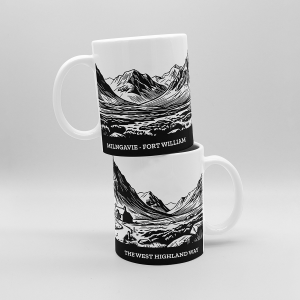
The West Highland Way is the most famous long-distance path, stretching 154km from Milngavie to Fort William, ending at the foot of Ben Nevis, the UK’s highest peak.
For families, the Isle of Skye offers accessible wonders like the Old Man of Storr and the Quiraing, which are iconic for photography.
While public transport (like the West Highland Line train) is available, a road trip is the best way to experience the remote corners of the Cairngorms or the North West Highlands.
Be prepared for the “midges” in summer and rapidly changing weather that can turn a simple day hike into a serious navigation challenge.
- Why Go?
For the freedom of wild camping and the unique “Munro bagging” culture. - Key Information
Best explored via road trip (North Coast 500). Be prepared for rapidly changing weather and “midges” in summer. - Top Hikes
West Highland Way (long-distance), Hidden Valley in Glencoe (Day hike). - Best Regions
Highlands, Isle of Skye, Cairngorms - Best Time to Visit
May to September. May and June offer the best balance of long daylight, less rain, and fewer midges.
 Select options
This product has multiple variants. The options may be chosen on the product page
Select options
This product has multiple variants. The options may be chosen on the product page

 Select options
This product has multiple variants. The options may be chosen on the product page
Select options
This product has multiple variants. The options may be chosen on the product page
 Select options
This product has multiple variants. The options may be chosen on the product page
Select options
This product has multiple variants. The options may be chosen on the product page
- Select options This product has multiple variants. The options may be chosen on the product page
- Select options This product has multiple variants. The options may be chosen on the product page
- Select options This product has multiple variants. The options may be chosen on the product page
Best UK Scenery
Moderate
5 – 10 days
Regional Gem
France (French Alps)
France’s Chamonix Valley is home to the famous Mont Blanc. The region is famous for its dramatic glaciers and the Aiguille du Midi cable car, which whisks visitors up to 3,842m for a staggering view of the Alps.
Getting there is easy via a 90-minute transfer from Geneva Airport, and once in the valley, a free local bus and train system connects all the major trailheads.
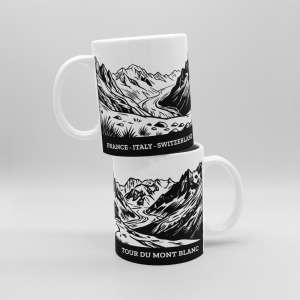
The crown jewel for long-distance hikers is the Tour du Mont Blanc (TMB), a 170km circuit through France, Italy, and Switzerland that typically takes 10–12 days. For families, the Grand Balcon Sud offers a relatively flat trail with constant, breathtaking views of the Mont Blanc range. Further south, the Écrins National Park offers a wilder, less crowded experience with rugged peaks and turquoise glacial lakes.
France is ideal for those who want a mix of high-altitude adventure and refined mountain culture, with excellent guides available for everything from glacier walks to technical climbing.
- Why go: World-class infrastructure, high-altitude cable cars (Aiguille du Midi), and gourmet mountain huts.
- Best Time to Visit: Late June to early September. High-altitude trails are usually snow-free by July.
- Key Info: Easily accessible from Geneva airport. Excellent for those who want high-altitude views without the 1,000m climb, thanks to extensive lift systems.
- Top Hikes: The Tour du Mont Blanc (TMB) is the definitive 170km long-distance trek.
- Best regions: Chamonix & Écrins National Park
 Select options
This product has multiple variants. The options may be chosen on the product page
Select options
This product has multiple variants. The options may be chosen on the product page
 Select options
This product has multiple variants. The options may be chosen on the product page
Select options
This product has multiple variants. The options may be chosen on the product page
- Select options This product has multiple variants. The options may be chosen on the product page
- Select options This product has multiple variants. The options may be chosen on the product page
Alpine Trekking
Moderate – High
10 – 14 days
Iconic
Switzerland (Swiss Alps)
Switzerland is a masterpiece of mountain scenery, where jagged peaks like the Matterhorn and the Eiger are framed by emerald valleys and pristine lakes.
The infrastructure is unparalleled; the SBB Swiss Rail network and various mountain cogwheel trains make it possible to reach elevations of over 3,000m without taking a single step. This makes it the most family-friendly mountain destination in the world, as even those with limited mobility can enjoy the Jungfraujoch or Gornergrat viewpoints. While public transport is the best way to get around, the country is also perfect for scenic road trips through passes like the Furka and Grimsel. Be prepared for high costs, as Switzerland remains one of the most expensive destinations for food and lodging.
For hikers, the options range from gentle lakeside strolls in the Engadin valley to the legendary Via Alpina, a long-distance trek that crosses the entire country. The Bernese Oberland is the heart of the action, offering iconic day hikes like the Eiger Trail, which runs directly beneath the mountain’s north face.
- Why go: To see the “Big Three” (Eiger, Mönch, Jungfrau) and the Matterhorn.
- Best Time to Visit: July to September. Cogwheel trains and cable cars run year-round, but summer is best for hiking.
- Key Info: Incredible public transport via the SBB train network. Perfect for families and luxury travelers.
- Top Hikes: The Eiger Trail (day hike) or the Via Alpina (long distance).
- Best Regions: Zermatt, Jungfrau, Engadin.
Luxury Stays
High
7 – 10 days
Iconic
Italy (Dolmites)
The Dolomites in Northern Italy are a UNESCO World Heritage site known for their unique pale limestone that turns a vibrant pink at sunset. Unlike the sharp granite of the French Alps, the Dolomites feature sheer vertical walls and strange rock towers like the Tre Cime di Lavaredo.
The area is highly accessible by car, and a road trip through the Great Dolomites Road is a must for anyone visiting the region. Families will find the Val Gardena area particularly welcoming, with plenty of cable cars and “rifugios” (mountain huts) serving world-class South Tyrolean cuisine.
For long-distance enthusiasts, the Alta Via 1 is a classic hut-to-hut trek that showcases the very best of the range over 10 days. The difficulty varies from easy valley walks to strenuous high-altitude traverses, and the regional bus system is efficient, though a car offers more freedom to explore hidden spots like Lago di Braies.
- Why go: A perfect blend of Austrian efficiency and Italian culture/food.
- Best Time to Visit: Mid-June to late September. Rifugios (huts) typically close in early October.
- Key Info: Famous for Via Ferrata (protected climbing paths). Great for road trips and hut-to-hut hiking.
- Top Hikes: Tre Cime di Lavaredo loop (Easy/Moderate), Alta Via 1 (Long distance).
- Best Regions: Val Gardena, Cortina d’Ampezzo
 Select options
This product has multiple variants. The options may be chosen on the product page
Select options
This product has multiple variants. The options may be chosen on the product page
 Select options
This product has multiple variants. The options may be chosen on the product page
Select options
This product has multiple variants. The options may be chosen on the product page
 Select options
This product has multiple variants. The options may be chosen on the product page
Select options
This product has multiple variants. The options may be chosen on the product page
- Select options This product has multiple variants. The options may be chosen on the product page
- Select options This product has multiple variants. The options may be chosen on the product page
- Select options This product has multiple variants. The options may be chosen on the product page
Day Hikes
Moderate
5 – 9 days
Iconic

Georgia (Caucasus Mountains)
Although more in Asia, the Caucasus Mountains offer huge alpine landscapes, medieval stone villages, and warm hospitality, all at a fraction of Western European prices.
The Svaneti region is a time capsule of medieval towers and 5,000m peaks, with the trek from Mestia to Ushguli becoming a world-class multi-day favorite hike. This mountain range even offers glaciers.
Getting around is an adventure in itself, usually involving “marshrutkas” (minibuses) through winding mountain passes. While the infrastructure is developing, the trails remain rugged and often solitary.
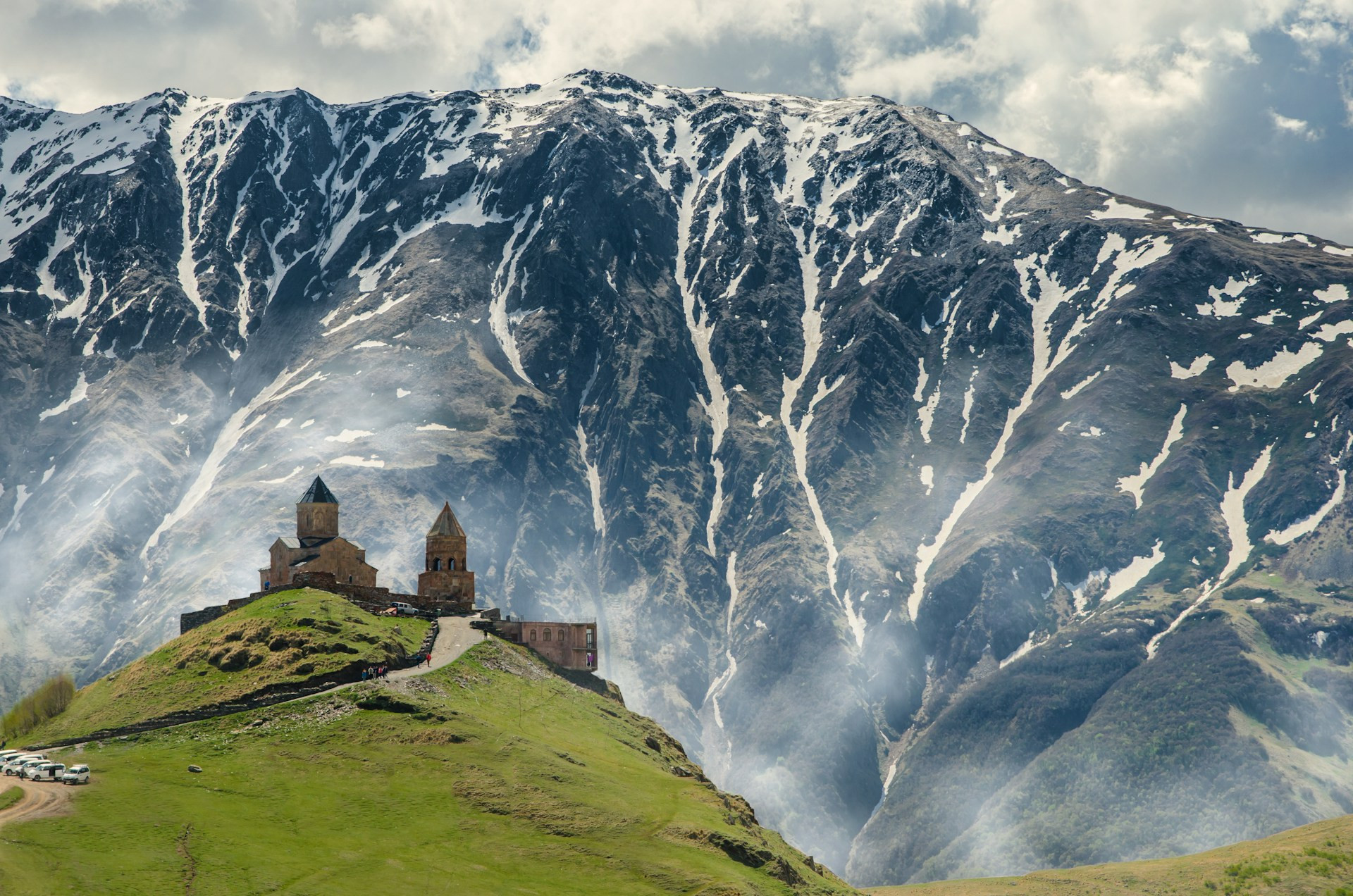
Georgia is perfect for adventurous travelers who want to trade luxury for authentic culture and raw mountain solitude. The Gergeti Trinity Church, perched against the backdrop of Mount Kazbek, is one of the most iconic sights in the mountain world.
- Why go: Dramatic 5,000m peaks and ancient history.
- Best Time to Visit: July to September. High passes like Mestia-Ushguli are often blocked by snow until late June.
- Key Info: Budget-friendly; trails are rugged. Best accessed by “marshrutka” (minibuses).
- Top Hikes: Mestia to Ushguli (Long distance), Gergeti Trinity Church (Day hike).
- Best Regions: Svaneti, Kazbegi.
Budget Travel
Low
5 – 7 days
Underrated
Albania (Albanian Alps)
Albania’s Accursed Mountains are wild, remote, and spectacular. The region feels like a hidden corner of Europe that time forgot, characterized by jagged limestone peaks and deep, green valleys.
The Valbona–Theth route is one of Europe’s best budget treks, crossing a dramatic pass that connects two of the country’s most isolated villages. It is a fantastic option for those looking to get off the beaten track without spending a fortune. Hospitality is at the core of the experience here; you’ll likely stay in traditional stone guesthouses (kullas) where hosts serve home-cooked meals.
Accessibility has improved with the Lake Koman Ferry, which provides a stunningly scenic approach to the mountains. This is a destination for those who enjoy quiet trails and a sense of true discovery.
- Why Go: To experience one of Europe’s last wild frontiers.
- Best Time to Visit: June to September. September is the “sweet spot” with cooler temperatures and fewer crowds.
- Key Info: Very affordable. Local guesthouses provide incredible hospitality and traditional meals.
- Top Hikes: Valbona to Theth (Multi-day).
- Best Regions: Valbona, Theth
Budget Travel
Low
4 – 7 days
Underrated

Slovenia (Julian Alps)
Slovenia’s Julian Alps offer classic alpine scenery in a compact, accessible package. Perfect for shorter trips or travelers wanting alpine beauty without the crowds of the major Alpine hubs.
The region is incredibly family-friendly, centered around Triglav National Park and the stunning Lake Bohinj, where trails are well-maintained and accessible. Mount Triglav, the nation’s highest peak, is a rite of passage for many. Most trailheads are within an hour’s drive of the capital, Ljubljana, making it one of the easiest mountain regions to explore.
Below the peaks, the Soča Valley offers emerald-green waters and world-class rafting, Slovenia offers a varied holiday.
- Why go: Pristine lakes and accessible 2,000m+ peaks.
- Best Time to Visit: June to August. June offers the “Midnight Sun,” while August typically has the most stable weather.
- Key Info: Compact geography makes it easy to see a lot in a short time.
- Top Hikes: Mount Triglav (Summit) or Lake Bohinj circular.
- Best Regions: Triglav National Park, Lake Bohinj.
Families
Moderate
6 – 8 days
Underrated
Slovakia (Tatras)
The High Tatras are sharp, dramatic, and surprisingly alpine—but at a fraction of the cost of the Alps. This range is the smallest “high mountain” chain in the world, meaning you can experience high-altitude granite peaks and glacial lakes in a very concentrated area.
The trails are rocky and well-marked, leading to high-altitude mountain huts (chatas) that offer affordable food and beds for hikers. The “Tatra Electric Railway” connects the main resort towns, making it easy to hop between trailheads without a car.
For a family-friendly day, cable cars to Lomnický štít provide one of the best views in Central Europe.
- Why go: Sharp granite peaks and affordable hut-to-hut hiking.
- Best Time to Visit: Mid-June to September. The high-altitude trails and seasonal huts (chatas) officially open on June 15th. Autumn (September) is spectacular for stable weather and clear views.
- Key Info: Easily accessible by the “Tatra Electric Railway” from Poprad.
- Top Hikes: High Tatras hut-to-hut routes.
- Best Regions: High & Low Tatras
-
 Select options This product has multiple variants. The options may be chosen on the product page
 -
Select options This product has multiple variants. The options may be chosen on the product page
-
 Select options This product has multiple variants. The options may be chosen on the product page
 -
Select options This product has multiple variants. The options may be chosen on the product page


Budget Alpine Hikes
Low – Moderate
4 – 7 days
Underrated
Austria (Austrian Alps)
Austria’s Alps offer a softer, greener alpine experience with charming villages, crystal-clear lakes, and an incredible system of mountain huts. The Tyrol region is the heart of Austrian mountain culture, offering everything from massive glaciers to wildflower-filled meadows.
It’s ideal for families and relaxed hikers who enjoy well-groomed trails and ending the day with a cold drink in a traditional village.
Austria’s infastructure is top-tier, with many summer cable cards going all the way to the high peaks and thus accessible to everyone.
The Eagle Walk is the standout long-distance route, traversing the entire state of Tyrol.
- Why go: For the world-class hut culture and “gemütlichkeit” (coziness).
- Best Time to Visit: June to October. June is perfect for wildflowers in the meadows, while September and October offer the famous “Golden Autumn” with crisp air and fewer crowds.
- Key Info: Excellent for families; wide range of cable cars available.
- Top Hikes: Eagle Walk (Long distance) or Zillertal Alps trails.
- Best Regions: Tyrol, Salzkammergut, Zillertal.
Family Hiking
Moderate
7 – 10 days
Underrated

Norway (Norwegian Fjords)
Norway’s mountains are where the peaks meet the sea. The landscape is defined by dramatic coastal cliffs, deep blue fjords, and massive glacier-carved valleys.
While public transport exists via spectacular trains and ferries, a road trip along the National Tourist Routes is the best way to see the country.
Iconic viewpoints like Trolltunga and Preikestolen attract thousands of hikers, but the vastness of the Jotunheimen National Park offers plenty of space for those seeking solitude. Be prepared for high prices and wet weather, but the reward of the midnight sun makes for unforgettable long summer days.
- Why go: For the midnight sun and world-famous viewpoints like Trolltunga.
- Best Time to Visit: Late June to August. The snow on high-altitude trails like Trolltunga often doesn’t melt until mid-June. Visit in late June for the Midnight Sun (24-hour daylight).
- Key Info: High budget required; weather can be wet even in summer.
- Top Hikes: Trolltunga (Strenuous), Preikestolen, Besseggen Ridge.
- Best Regions: Lofoten, Jotunheimen, Trolltunga region.
Long Summer Days
High
7 – 14 days
Iconic
Poland (Tatras)
Poland’s Tatras offer a vibrant mix of mountain culture and accessible trails. The town of Zakopane serves as the perfect base, filled with traditional wooden architecture and lively markets.
The mountains themselves are divided into the High Tatras, with their sharp granite peaks, and the Western Tatras, which are softer and more forested.
The hike to Morskie Oko (Eye of the Sea) is one of the most popular family walks in Europe, leading to a stunning lake surrounded by high peaks.
For those seeking a challenge, the climb to Rysy (the highest point in Poland) offers a strenuous but rewarding alpine experience.
- Why go: Accessible alpine hiking and vibrant mountain culture.
- Best Time to Visit: June to September. Avoid the first two weeks of May and Polish school holidays (late July/August) if you want to avoid massive crowds at Morskie Oko.
- Key Info: Can get very crowded during Polish school holidays.
- Top Hikes: Morskie Oko (Easy/Family) or Rysy (Strenuous).
- Best Regions: Zakopane’s Tatras.
 Select options
This product has multiple variants. The options may be chosen on the product page
Select options
This product has multiple variants. The options may be chosen on the product page
 Select options
This product has multiple variants. The options may be chosen on the product page
Select options
This product has multiple variants. The options may be chosen on the product page
 Select options
This product has multiple variants. The options may be chosen on the product page
Select options
This product has multiple variants. The options may be chosen on the product page
- Select options This product has multiple variants. The options may be chosen on the product page
- Select options This product has multiple variants. The options may be chosen on the product page
- Select options This product has multiple variants. The options may be chosen on the product page
Families
Low
3 – 4 days
Underrated
Best European Island Hiking
Island hiking offers a unique blend of coastal drama, volcanic terrain, and vertical challenges that feel entirely distinct from the continental Alps. These destinations provide a “best of both worlds” experience: you can spend your morning summiting a jagged peak or navigating a cloud forest and your afternoon cooling off in the Atlantic or Mediterranean.
Madeira and Tenerife are the ultimate “winter sun” escape, offering stable hiking temperatures while mainland trails are buried in snow.

Madeira (Portugal)
Madeira is a volcanic island that offers a surreal contrast between lush, misty laurel forests and knife-edge volcanic ridges that pierce the clouds. The hike between Pico do Arieiro and Pico Ruivo is one of the most dramatic in Europe, featuring tunnels and steep staircases carved into the rock.
It is an ideal destination for those who want mountain drama without the extreme cold of the mainland.
- Why go: For the lush “levada” walks and dramatic volcanic ridge treks above the clouds.
- Best Time to Visit: Year-round. April to June is peak flowering season, while September offers warm seas and quiet trails.
- Key Info: Accessible by car; narrow mountain roads require confident driving.
- Top Hikes: Pico do Arieiro to Pico Ruivo (Moderate/Hard), Levada do Caldeirão Verde (Easy).
- Best Regions: Pico do Arieiro, Pico Ruivo, São Vicente.
Winter Sun
Moderate
5 – 7 days
Regional Gem
Tenerife (Spain)
Tenerife is home to Mount Teide, Spain’s highest peak at 3,718m. Hiking here feels like walking on another planet; the Teide National Park is a vast lunar landscape of obsidian, red volcanic rock, and ancient craters.
It is arguably the best winter hiking destination in Europe, offering warm temperatures while the rest of the continent is under snow. A permit is required to reach the very summit of Teide, so plan ahead.
- Why go: For lunar volcanic landscapes and the chance to hike Spain’s highest peak in a t-shirt in January.
- Best Time to Visit: October to May. Summer can be too hot for low-altitude hiking, making winter the “golden season.”
- Key Info: High-altitude permits are required for the Teide summit. Excellent road infrastructure.
- Top Hikes: Mount Teide Summit (Hard), Anaga Forest (Moderate), Masca Gorge (Moderate).
- Best Regions: Teide National Park, Anaga Mountains.
 Select options This product has multiple variants. The options may be chosen on the product page
 Select options This product has multiple variants. The options may be chosen on the product page
 Select options This product has multiple variants. The options may be chosen on the product page
Winter Sun
Moderate
5 – 7 days
Regional Gem

Corscica (France)
Corsica is often called the “Mountain in the Sea.” It is home to the GR20, legendary for being the toughest long-distance trail in Europe. The island’s interior is a rugged spine of granite peaks, alpine lakes, and dense Mediterranean scrub (maquis).
Unlike the manicured trails of Switzerland, Corsica is wild and punishing, requiring hands-on scrambling and serious fitness. However, the reward is a unique blend of high-altitude adventure and stunning views of the turquoise Mediterranean coastline.
- Why go: To conquer the GR20 and experience the wildest, most rugged mountains in the Mediterranean.
- Best Time to Visit: June and September. July and August are often too hot for the intense physical demand of the GR20.
- Key Info: The GR20 requires booking huts months in advance. Very demanding terrain.
- Top Hikes: GR20 (Long distance), Gorges de la Restonica (Day hike).
- Best Regions: GR20, Corte region.
 Select options This product has multiple variants. The options may be chosen on the product page
- Select options This product has multiple variants. The options may be chosen on the product page
Experienced Hikers
Moderate
14 – 16 days
Regional Gem
Faroe Islands (Denmark)
The Faroe Islands are a dramatic, wind-swept archipelago in the North Atlantic that feels like the edge of the world. The landscape is defined by sheer sea cliffs that drop hundreds of meters into a crashing ocean, vibrant green turf-roofed villages, and iconic sea stacks.
The hiking is famously “vertical,” with trails like the one to the Slave Cliff (Trælanípa) offering an optical illusion where a lake appears to perch hundreds of feet directly above the ocean.
While the islands are connected by an impressive network of sub-sea tunnels and ferries, the weather is the ultimate boss, it is famously unpredictable, often moving through four seasons in a single hour. It is a dream destination for photographers and those who love raw, maritime wilderness.
- Why go: For world-class coastal photography, puffin colonies, and the most dramatic sea cliffs in Europe.
- Best Time to Visit: June to August. This period offers the most “stable” weather and the famous 24-hour daylight of the northern summer.
- Key Info: Weather is extremely unpredictable (fog is common). Many trails cross private land and require a hiking fee. A rental car is essential.
- Top Hikes: Lake Sørvágsvatn/Trælanípa (Easy/Moderate), Kallur Lighthouse (Moderate), Slættaratindur (Summit).
- Best Regions: Vágar, Eysturoy, Kalsoy.
Photography
High
5 – 8 Days
Regional Gem / Underrated
Our Personal Favourites
- Scotland: Our top pick for a local “wilderness” fix. It offers incredible wildlife, world-class wild camping, and iconic long-distance paths like the West Highland Way. It’s perfect for families who love a road trip and hikers who don’t mind a bit of mud for a massive reward.
- Switzerland: Yes, it’s expensive, but it’s the most “postcard-perfect” place on earth. The ease of access is unbeatable; you can go from a city centre to a 3,000m glacier in a couple of hours using nothing but immaculate trains and gondolas.
- France: The best for high-altitude drama. It is easy to access great trails without 1,000m climbs thanks to the lift systems in Chamonix. Because it sits on the border, it’s incredibly easy to combine with a trip to Switzerland or Italy.
- Norway: A must-see for the fjords. Whether you experience it via a coastal cruise, a backpacking trip through Jotunheimen, or a road trip through the Lofoten Islands, the scale of the landscape is mind-blowing.
- Slovenia: The perfect “all-rounder.” It’s compact, affordable, and family-friendly, offering emerald rivers and sharp peaks that are much quieter than the French or Swiss Alps.
- Slovakia: The ultimate underrated gem. If you want sharp, granite alpine peaks and authentic mountain huts without the premium price tag, the High Tatras are waiting for you.
Mark Your Adventures With Our Keepsakes
-
Select options This product has multiple variants. The options may be chosen on the product page
-
 Select options This product has multiple variants. The options may be chosen on the product page
 -
Select options This product has multiple variants. The options may be chosen on the product page
-
Select options This product has multiple variants. The options may be chosen on the product page


Take the Leap
Subscribe & Save 10%
Get the latest blogs, products, and 10% off when you sign up for our newsletter.
FAQs
What are the cheapest mountain destinations in Europe?
For travelers on a budget, Albania, Georgia, Slovakia, and Poland offer world-class alpine scenery and traditional hospitality at a fraction of the cost of the Western Alps.
What is the best time of year for mountain travel in Europe?
- Summer (June–September): Best for the high Alps (France, Switzerland, Italy) and the Highlands of Scotland.
- Winter/Spring (October–May): Best for “Winter Sun” hiking in Tenerife and Madeira.
- Autumn (September–October): Best for foliage in Slovenia, Austria, and the Tatras.
Which European destinations are best for beginners and families?
Slovenia, Switzerland, Austria, and Madeira are excellent for beginners. These regions offer well-marked trails, extensive cable car networks to skip the hard climbs, and plenty of “easy-access” viewpoints.
Which mountain destinations are best for "Winter Sun"?
If you want to hike in a t-shirt while the rest of Europe is snowing, head to Tenerife (Teide National Park) or Madeira. Although not in Europe, the Atlas Mountains in Morocco are also a great nearby option for winter warmth.
Which airport is closest to each mountain destination?
- Geneva Airport: Best for Chamonix (France) and the Mont Blanc massif.
- Zurich/Bern Airport: Gateway to the Swiss Alps (Jungfrau, Zermatt).
- Innsbruck Airport: Located right in the heart of the Austrian Alps.
- Poprad-Tatry Airport: Closest to the High Tatras in Slovakia.
- Tromsø Airport: The gateway to Northern Norway’s arctic peaks.
- Tirana Airport: Best for the Accursed Mountains in Albania.
Which destinations are best for day trips and iconic viewpoints?
- Switzerland: Jungfraujoch and Gornergrat (via train).
- Norway: Preikestolen (Pulpit Rock) and Trolltunga.
- France: Aiguille du Midi (Chamonix).
- Tenerife: Mount Teide (via cable car).
- Scotland: The Old Man of Storr and Glencoe.
Which destinations can be easily combined for a two-center holiday?
- Slovakia & Poland: Hike the High Tatras from both sides of the border.
- Slovenia & Austria: A short drive connects the Julian Alps to the Austrian Tyrol.
- France & Switzerland: Chamonix and Zermatt are easily linked by car or the “Mont Blanc Express” train.
- Italy & Switzerland: Visit the dolmites and then take the train to Switzerland.
Which European destinations are best for road trips?
- Scotland: The North Coast 500 (NC500) and the Isle of Skye.Best European Destinations for Mountain Holidays
- Norway: The Atlantic Ocean Road and fjord-side routes.
- Austria: The Grossglockner High Alpine Road.
- Italy: The Great Dolomites Road.
Compare Destinations
| Destination | Holiday Type | Car vs. Public Transport | Price |
|---|---|---|---|
| Scotland | Wild & Family | Car recommended | Moderate |
| France | Alpine & Accessible | Public Transport | Moderate – High |
| Switzerland | Luxury & Accessible | Public Transport | High |
| Italy (Dolomites) | Scenic | Car recommended | Moderate |
| Georgia | Remote | Car optional | Low |
| Albania | Remote | Car optional | Low |
| Slovenia | Family & Beginner | Car optional | Moderate |
| Slovakia | Budget | Train or car | Low |
| Austria | Family & Beginner | Car optional | Moderate |
| Norway | Scenic | Car recommended | High |
| Poland | Budget & Family | Public Transport | Moderate |
| Madeira | Winter Sun | Car recommended | Moderate |
| Tenerife | Winter Sun & Family | Car recommended | Moderate |
| Corsica | Expert | Car recommended | Moderate |
| Faroe Islands | Photographer | Car essential | High |
Capture Where You’ve Been
-
 Select options This product has multiple variants. The options may be chosen on the product page
 -
 Select options This product has multiple variants. The options may be chosen on the product page
 -
 Select options This product has multiple variants. The options may be chosen on the product page
 -
 Select options This product has multiple variants. The options may be chosen on the product page
 -
 Select options This product has multiple variants. The options may be chosen on the product page
 -
 Select options This product has multiple variants. The options may be chosen on the product page
 -
 Select options This product has multiple variants. The options may be chosen on the product page
 -
 Select options This product has multiple variants. The options may be chosen on the product page
 -
 Select options This product has multiple variants. The options may be chosen on the product page
 -
 Select options This product has multiple variants. The options may be chosen on the product page
 -
Select options This product has multiple variants. The options may be chosen on the product page
-
 Select options This product has multiple variants. The options may be chosen on the product page