Britain is genuinely strange in ways that tourists from elsewhere rarely get to see, because most of what’s promoted as a “unique UK experience” isn’t unique at all. Afternoon tea, Buckingham Palace, a double-decker bus, these things exist and are fine. But they’re not what makes this country interesting.
The genuinely distinctive stuff tends to be regional, specific, and slightly difficult to explain. A rotating boat lift in a Scottish field. A theatre cut into a cliff face above the Atlantic. A fire festival in Shetland in January that’s been running, in some form, since the Viking age. These are the experiences that don’t have obvious equivalents elsewhere, and they’re what this article is about.
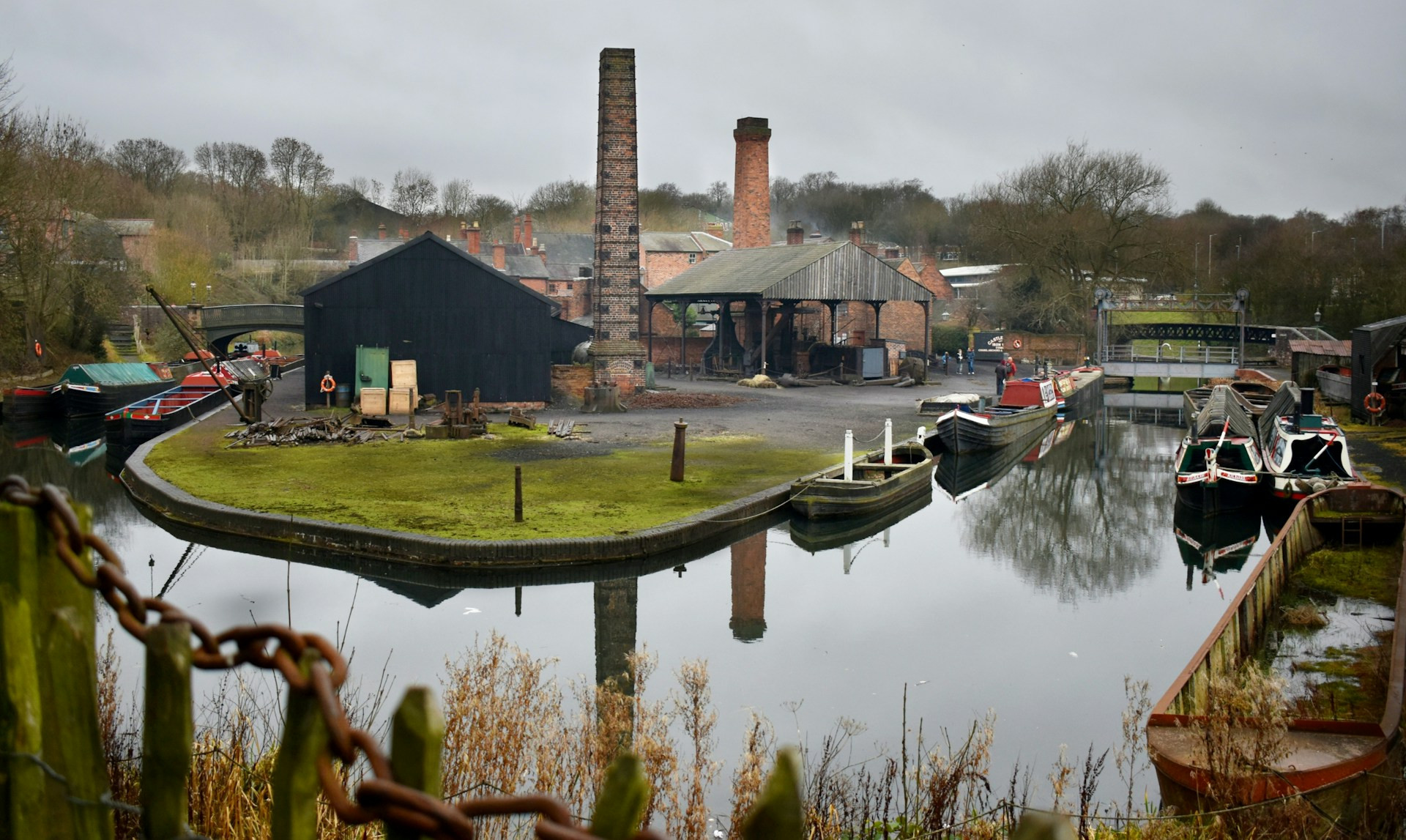
”Our Easter hiking plans were completely blown away by severe winds, so we made a last-minute detour to the Black Country Living Museum. It turned out to be the perfect escape, sheltering from the wind inside historic pubs, sweet shops, and a school, all while eating the best beef-dripping chips I've ever had.
Robert JohnsonThemeNectar
A note on curation
This isn’t a comprehensive list of UK attractions. It’s a considered selection of things that are either genuinely one-of-a-kind things, or experiences that the UK does meaningfully better than anywhere else. If something appears here, it’s because it clears at least one of those bars.
The “other places to consider” bullets that most articles of this type use are mostly filler. Where I’ve included alternatives, it’s because they’re genuinely worth your time, not because they needed a
mention.
Top must-visit museums
Most museums are passive. You look at things behind glass; you read a panel; you leave. A handful of places in the UK have decided that’s not good enough, and they are worth travelling for.
Beamish is the benchmark. If you’re going to visit one open-air living history museum in the UK, this is the one — 350 acres of County Durham countryside containing a recreated 1900s town, a 1940s farm, a Georgian colliery village, and a working tramway that connects them. The actors who work here don’t break character. The Edwardian bakery sells actual bread. The pub sells actual beer.
What makes Beamish work where similar attractions feel like a school trip is the density of detail. Nothing is decorative. The blacksmith is making something. The schoolroom has a teacher who will put you to work if you sit down. The level of institutional commitment to not cutting corners is visible in every building.
It’s also enormous. A full-day visit.
With a dynamic calendar of special events, interactive exhibits, and opportunities to engage with living history, Beamish offers a one-of-a-kind adventure where the past comes alive in unforgettable ways. Whether you’re a history enthusiast or simply searching for a truly unique experience, Beamish promises memories you’ll treasure long after your visit.
A comparable experience to Beamish but with a different industrial focus: this is the West Midlands during the height of Britain’s manufacturing era, and it’s excellent. The canal network, the
chain-making workshops, the recreated back-to-back houses, the Black Country Living Museum does for the Industrial Revolution what Beamish does for the Edwardian North East.
It’s slightly more compact than Beamish, which makes it better suited to a half-day or a visit with younger children. The underground mine experience is a standout, not for the claustrophobic.
Worth knowing: the museum featured heavily in the filming of Peaky Blinders, which has made it considerably busier in recent years. Midweek visits during term time are quieter.
The Ulster Folk Museum near Belfast is less visited than Beamish or the Black Country equivalent, which is partly why it’s worth including. 136 acres of recreated rural Ulster from the late 19th to mid-20th century farmhouses, a village, a school, a church, working craftspeople, with a quality of reconstruction that rivals the better-funded English equivalents.
It sits alongside the Ulster Transport Museum on the same site, which includes one of the most complete collections of Irish railway history in existence. Together, they make a full day out that most visitors to Belfast don’t know exists.
The Ulster Folk Museum offers a one-of-a-kind adventure, perfect for anyone looking to explore Northern Ireland’s unique past.
The Falkirk Wheel is not a heritage attraction. It was built in 2002, and it’s a piece of working infrastructure, a rotating boat lift that connects two Scottish canals at a height difference of 35 metres, doing the job that once required 11 locks and a full day of navigation.
The structure itself is extraordinary. Two gondolas, each capable of holding several boats, rotate in a balanced motion that uses approximately the same energy as boiling eight kettles, because the water displaced by a boat entering one gondola exactly counterbalances the other. It works because of physics, and watching it work for the first time is one of those moments where engineering becomes genuinely beautiful.
You can visit the visitor centre for free and watch from the ground, or you can take the 60-minute boat trip that goes through the lift itself and into the Roughcastle Tunnel, which is the right way to
experience it. The surrounding canal basin is pleasant for a walk regardless.
Other places to consider
England
- The British Museum, London
- The Beatles Story, Liverpool
- National Railway Museum of York
- Shakespeare’s Globe, London
- Shakespeares Birthplace, Stratford upon Avon
Wales
- Big Pit National Coal Museum, Wales
Northern Ireland
- Titanic Belfast, Northern Ireland
- W5, Belfast, Northern Ireland
Unforgettable Outdoor Theatre and Historic Venues
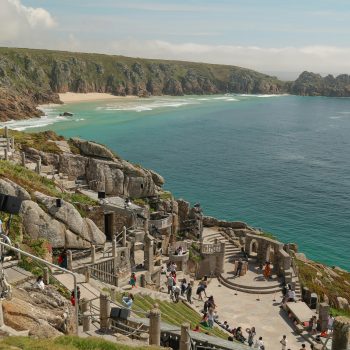
The Minack was carved into cliffs above Porthcurno by Rowena Cade, who started the work in 1932 and largely continued it herself for the next 40 years. It now seats around 750 people on granite terraces with the Atlantic Ocean as its backdrop and no roof.
A performance here is one of the more unusual things you can do in England. The acoustics are imperfect, the seating is hard granite (bring a cushion ), and the weather can be unpredictable. None of that matters. The light on the sea during an evening performance, the stone under your hands, the fact that you’re watching King Lear or a musical comedy in a venue that someone built out of a hillside with their own hands produces an atmosphere that a purpose-built theatre simply cannot replicate.
The season runs from May to September. Book well ahead for anything in July or August. Watching a performance here, with the sea as your stage, is a bucket-list experience for theatre lovers and those seeking unique experiences.
For something closer to London, the Roman Theatre of Verulamium in St Albans is the only Roman theatre in Britain still hosting live performances. It was built around 140 AD. The summer open-air festival runs Shakespeare alongside family shows and contemporary work, with the ruins and the surrounding park as the setting.
It’s significantly less dramatic than the Minack, the interest here is historical rather than scenic. Sitting in a structure that was built by the Romans and watching a comedy that the Romans would have recognised is a specific kind of experience that you can’t really get anywhere else in this country.
Immersive Literature and Heritage Attractions
The Jane Austen Centre in Bath offers a uniquely immersive experience for literature lovers, history enthusiasts, and anyone seeking a hands-on journey into Regency England. This museum stands out for its interactive exhibits, costumed guides, and authentic Georgian town house setting, allowing visitors to step into Jane Austen’s world and explore how Bath shaped her life and writing.
It works best for people who already know the novels rather than as an introduction, but as a supplement to reading her work, and as a reason to spend a day in Bath.
Music by Candelight, London, England
Fever (the events company) runs candlelit classical and contemporary music concerts across London in historic venues including St Mary’s Church and Central Hall Westminster illuminated by hundreds of flickering candles, creating a magical setting for unforgettable performances.
The format has been widely copied, but the London venues are among the best. If you’re in the city and want an evening that’s genuinely atmospheric rather than just expensive, these are a better option than many of the tourist-adjacent theatre and music events marketed at visitors.
Book ahead.
 Select options This product has multiple variants. The options may be chosen on the product page
 Select options This product has multiple variants. The options may be chosen on the product page
 Select options This product has multiple variants. The options may be chosen on the product page
Unique Festivals and Living Traditions
The Fringe is the world’s largest arts festival, which is a fact that gets repeated so often it has stopped meaning much. What it actually means: for three weeks in August, Edinburgh has more live performances per square mile than anywhere on earth, across over 300 venues including converted closes, churches, basements, and a functioning pub where you might find the next Dave Chappelle or a deeply strange one-person show about grief and spreadsheets.
There are thousands of performances across theatre, comedy, dance, circus, cabaret, children’s shows, musicals, opera, music, and exhibitions, making the festival an endless playground for art lovers. The city buzzes with energy as street performers, pop-up venues, and crowds fill the historic streets, creating an atmosphere unlike anywhere else.
The distinction worth making is between the Fringe and the rest of the Edinburgh Festival Programme, which runs simultaneously. The official programme (opera, orchestral, established theatre) is excellent but expensive and bookable. The Fringe is different: some of it is free, most of it is cheap, and the process of stumbling into something unexpectedly brilliant is the point.
Come for three days minimum. Stay longer if you can. The city itself during August is an experience.
 Select options This product has multiple variants. The options may be chosen on the product page
 Select options This product has multiple variants. The options may be chosen on the product page
 Select options This product has multiple variants. The options may be chosen on the product page
 Select options This product has multiple variants. The options may be chosen on the product page
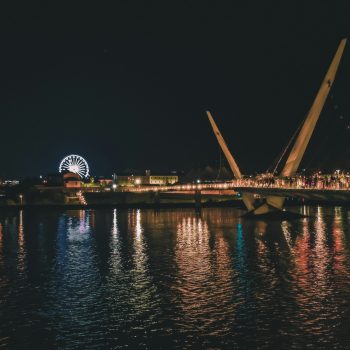
Londonderry’s / Derry’s Halloween festival is the largest Halloween celebration in Europe, which sounds like a tourist board claim but is, in this case, accurate. The city has a genuine claim to the tradition: Derry sits close to the hills of Donegal where the ancient Celtic festival of Samhain (the precursor to Halloween) was originally practised, and the celebration here reflects that heritage rather than
borrowing from American commercialisation.
The Awakening of the Walled City trail, the costumed parade through Derry’s 17th-century walls, and the fireworks above the Foyle make it visually extraordinary. The fact that it’s free, genuinely community-rooted, and happens in a city that’s already architecturally compelling makes it worth the trip.
Cheese Rolling, Gloucestershire, England
The Cooper’s Hill cheese roll needs very little explanation. A wheel of Double Gloucester is released down a near-vertical hillside. People chase it. The cheese almost always wins. The person who crosses the bottom first is declared the winner and receives the cheese.
The hill has a gradient of up to 1:2 in places. Injuries are routine. It has been running in some form since at least the early 19th century, and possibly much longer. There is no entry process, you simply turn up if you choose to and run.
This is best attended as a spectator. The hill is in Brockworth, near Cheltenham, and the event happens on the Spring Bank Holiday. There’s no formal organisation, no corporate sponsorship, and no infrastructure to speak of which is precisely what makes it feel real. It is the kind
of event that only Britain would still be running, and it is exactly as chaotic as it sounds.
 Select options This product has multiple variants. The options may be chosen on the product page
 Select options This product has multiple variants. The options may be chosen on the product page
 Select options This product has multiple variants. The options may be chosen on the product page
For a truly unique and dramatic cultural experience, Up Helly Aa in Shetland is an unmissable spectacle that celebrates the islands’ Viking heritage with fiery flair. Held annually from January to March.
The highlight of Up Helly Aa is the torch-lit procession: nearly a thousand costumed participants, known as “guizers,” march through the night streets in elaborate Viking attire, carrying blazing torches and singing traditional songs. The procession culminates in the dramatic burning of a handcrafted replica Viking longship, lighting up the winter sky and symbolizing both renewal and the islands’ Norse roots.
If you’re seeking a cultural adventure with a twist, Up Helly Aa promises a once-in-a-lifetime experience where ancient tradition, spectacle, and Shetland’s vibrant community spirit come together in a blaze of glory.
For those seeking a truly unique and adrenaline-charged experience, the Tar Barrels of Ottery St. Mary is a must-see spectacle that immerses visitors in one of Britain’s most extraordinary living traditions.
Every year on November 5th, the narrow streets of this East Devon town erupt in fiery celebration as locals, known as “barrel rollers” hoist blazing tar-soaked barrels onto their shoulders and race them through packed crowds, illuminating the night with flames.
This centuries-old festival, believed to date back to the aftermath of the Gunpowder Plot of 1605, is now unique to Ottery St. Mary, making it a one-of-a-kind event in the UK. If you’re searching for an unforgettable adventure and a glimpse into Britain’s wildest customs, the Tar Barrels of Ottery St. Mary promises a night you’ll never forget.
Take the Leap
Subscribe & Save 10%
Get the latest blogs, products, and 10% off when you sign up for our newsletter.
Explore Wall Art
-
 Select options This product has multiple variants. The options may be chosen on the product page
 -
Select options This product has multiple variants. The options may be chosen on the product page
-
Select options This product has multiple variants. The options may be chosen on the product page